
Introduction
Most people don’t think twice about what’s beneath their feet—until a real estate listing, home inspection, or renovation plan mentions something unfamiliar. That’s where the closed basement meaning often sparks confusion. Is it unfinished? Is it sealed off? Or does it hint at something more serious?
In simple terms, understanding the closed basement meaning can help you make smarter decisions as a homeowner, buyer, or investor. It affects everything from comfort and storage to safety, legality, and resale value. And yes, it’s one of those details that can quietly add or subtract thousands from a home’s worth.
Let’s break it down in plain language. No jargon overload. Just clear explanations, real-life examples, and practical insights you can actually use.
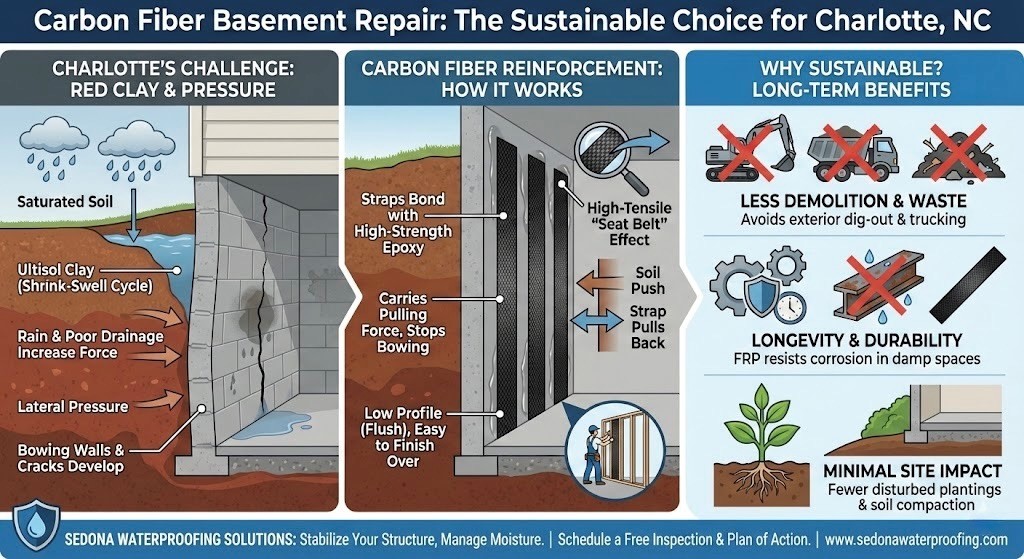
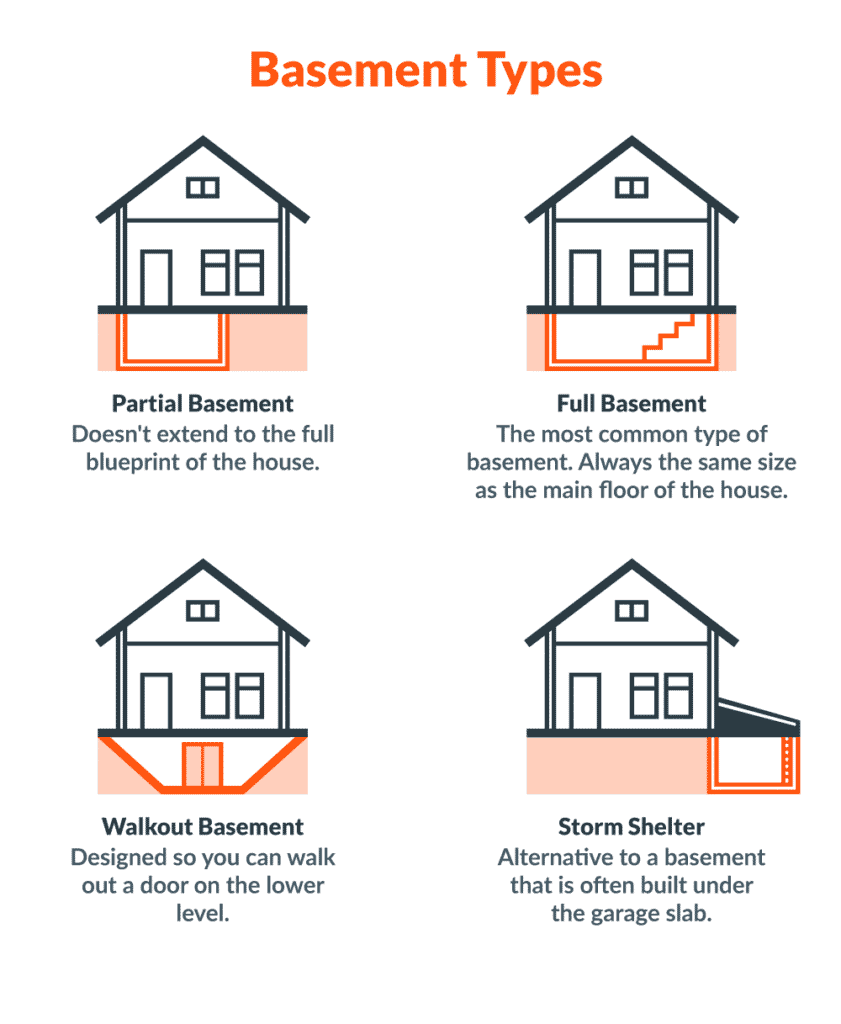
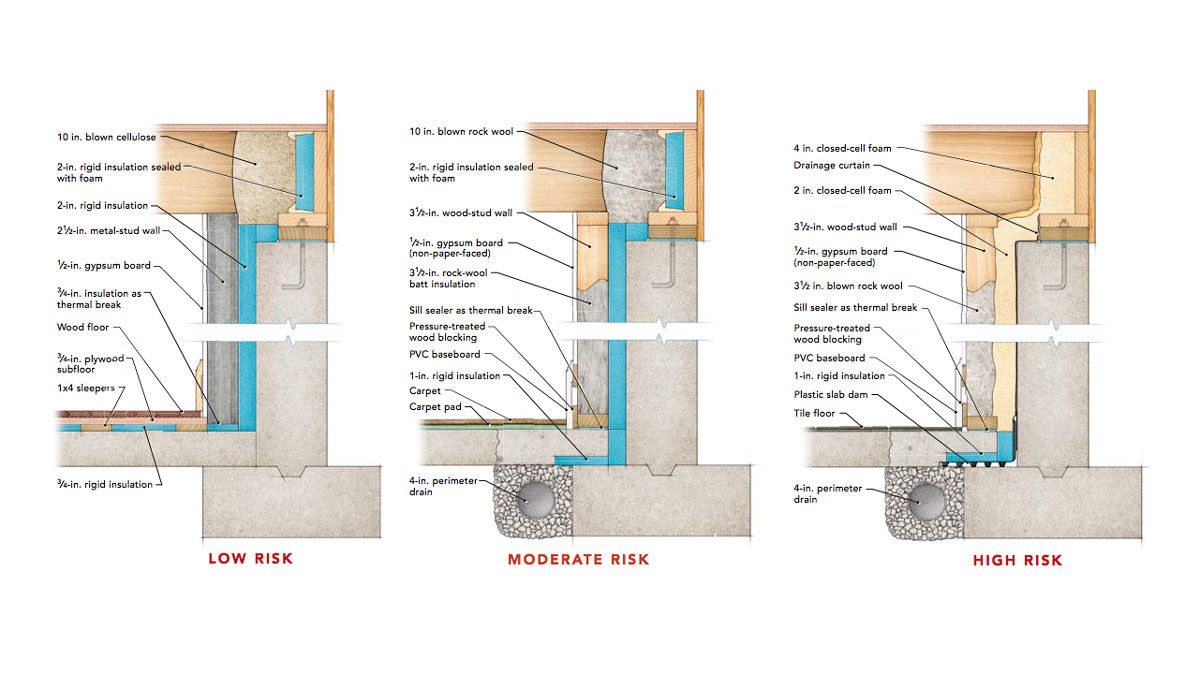
Table of Contents
What Is the Closed Basement Meaning?
Closed Basement vs Open Basement: Key Differences
Why Homes Have Closed Basements
Types of Closed Basements Explained
Pros and Cons of a Closed Basement
Building Codes, Safety, and Legal Considerations
Closed Basement Meaning in Real Estate Listings
Renovation, Conversion, and Cost Factors
Common Myths About Closed Basements
FAQ
Conclusion
What Is the Closed Basement Meaning?
Clear Definition in Simple Terms
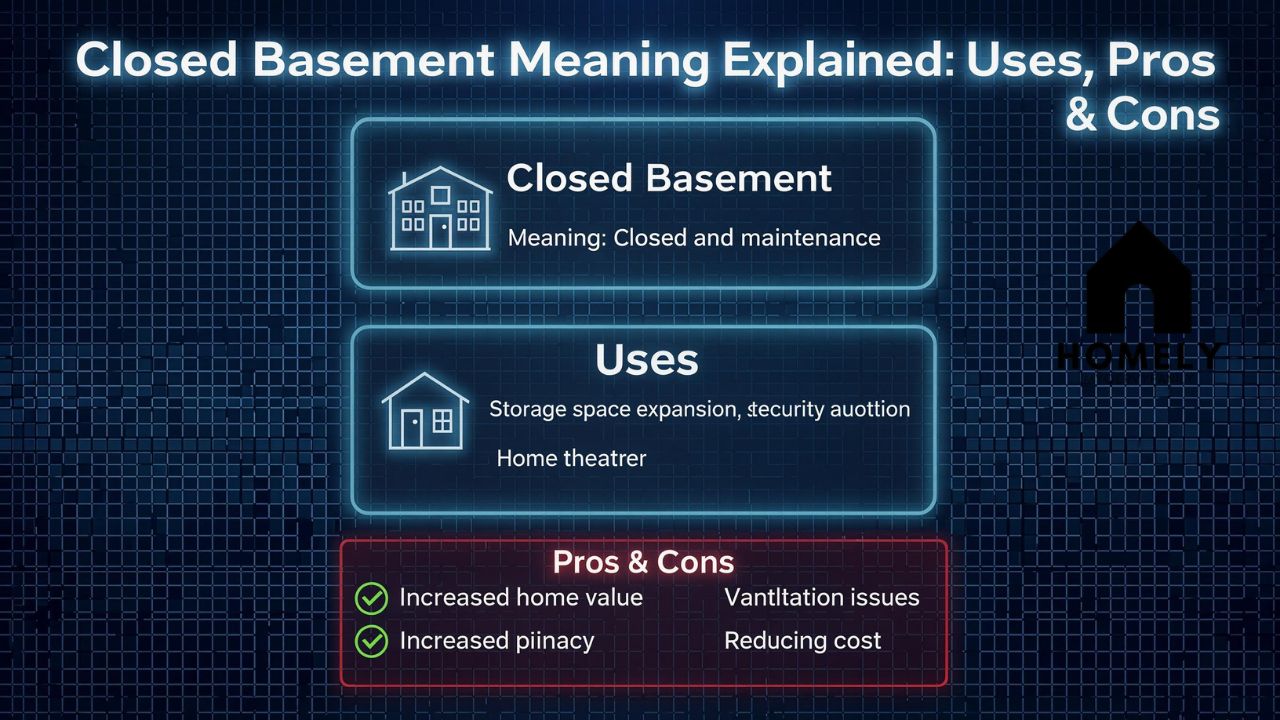
The closed basement meaning refers to a basement space that is intentionally enclosed, sealed, or restricted from open access or airflow to the rest of the house. This closure can be physical (walls, doors, sealed entries) or functional (limited ventilation, restricted use).
In reality, a closed basement isn’t always a bad thing. Sometimes it’s designed that way for safety, moisture control, structural reasons, or zoning compliance. Other times, it reflects an older construction style or a temporary solution by a homeowner.
What “Closed” Actually Implies
“Closed” does not automatically mean:
- Abandoned
- Unsafe
- Useless
- Illegal
Instead, it often means the basement is:
- Not integrated into daily living areas
- Separated by permanent or semi-permanent barriers
- Limited in access or use
That distinction matters—especially when evaluating a property.
Closed Basement vs Open Basement: Key Differences
Structural and Functional Comparison
An open basement is usually accessible, ventilated, and designed for flexible use—think recreation rooms, guest suites, or home offices. A closed basement, on the other hand, is more controlled and restricted.
| Feature | Closed Basement | Open Basement |
|---|---|---|
| Access | Limited or sealed | Fully accessible |
| Ventilation | Minimal or isolated | Integrated airflow |
| Usage | Storage, utilities | Living or multi-purpose |
| Natural Light | Rare | Often present |
| Renovation Ease | Moderate to difficult | Easier |
How This Affects Daily Living
In daily life, the difference shows up in comfort and usability. Open basements feel like an extension of the home. Closed ones feel separate—sometimes intentionally so.
Why Homes Have Closed Basements
Historical Construction Practices
Older homes, especially those built before modern HVAC systems, often used closed basements to isolate moisture, cold air, and pests. It was a practical solution at the time.
Climate and Moisture Control
In humid or flood-prone regions, closing off a basement helps:
- Prevent mold growth
- Reduce humidity migration
- Protect structural elements
Safety and Structural Integrity
Some basements are closed due to:
- Low ceiling height
- Structural supports that limit movement
- Unfinished surfaces that pose hazards
Zoning and Code Compliance
Local building codes may restrict basement use as living space unless specific requirements are met. Closing the basement can be the simplest way to remain compliant.
Types of Closed Basements Explained
Fully Sealed Basements
These have no direct interior access and are often used for utilities or crawlspace-like storage.
Partially Closed Basements
Access exists, but the space is separated by walls or locked doors, limiting daily use.
Utility-Only Basements
Dedicated to HVAC systems, water heaters, electrical panels, or sump pumps.
Temporarily Closed Basements
Closed due to renovations, safety issues, or pending inspections.
Pros and Cons of a Closed Basement
Advantages You Should Know
- Better moisture control
- Lower heating and cooling costs
- Reduced noise transfer
- Enhanced safety for children
Potential Drawbacks
- Limited usable space
- Lower perceived home value
- Reduced flexibility
- Possible inspection red flags
Emotional and Practical Impact
For some homeowners, a closed basement offers peace of mind. For others, it feels like wasted potential. Both reactions are valid.
Building Codes, Safety, and Legal Considerations
Egress and Fire Safety
Most building codes require:
- Emergency exits
- Minimum ceiling heights
- Adequate ventilation
A closed basement often avoids these requirements by not being classified as habitable space.
Health Considerations
Poorly managed basements can harbor:
- Mold spores
- Radon gas
- Excess humidity
Closure can be a preventative measure—but only if monitored properly.
Insurance Implications
Insurance providers may:
- Exclude closed basements from coverage
- Require disclosure of restricted access
Closed Basement Meaning in Real Estate Listings
How Agents Describe It
You might see phrases like:
- “Basement not included in square footage”
- “Utility-only lower level”
- “Sealed basement space”
Each points back to the closed basement meaning without using the exact phrase.
Impact on Property Value
While closed basements don’t always reduce value, they can:
- Limit buyer interest
- Affect appraisal calculations
That said, homes with well-maintained closed basements often sell just fine—especially when priced accurately.
Renovation, Conversion, and Cost Factors
Can a Closed Basement Be Opened?
In many cases, yes—but it depends on:
- Structural feasibility
- Local codes
- Budget
Average Costs to Convert
| Upgrade | Estimated Cost |
|---|---|
| Waterproofing | $3,000–$10,000 |
| Ventilation | $2,000–$6,000 |
| Egress windows | $4,000–$8,000 |
| Full finishing | $20,000–$50,000+ |
Return on Investment
Finished basements can recoup 70–75% of renovation costs, but only if legally permitted and properly executed.
Common Myths About Closed Basements
“Closed Means Unsafe”
Not true. Many closed basements are safer than poorly finished open ones.
“You Can’t Ever Use It”
Also false. Storage, wine cellars, storm shelters, and mechanical rooms are all valid uses.
“Buyers Hate Closed Basements”
Buyers dislike uncertainty—not closed spaces. Transparency matters more than openness.
FAQ
What does a closed basement mean in real estate terms?
It means the basement is not intended for regular living use and may have restricted access or limited functionality.
Is a closed basement considered unfinished?
Often yes, but not always. Some are finished but intentionally separated.
Can a closed basement be converted into living space?
Yes, if it meets building codes for safety, ventilation, and egress.
Does a closed basement lower home value?
It can affect perceived value, but proper pricing and disclosure minimize impact.
Is a closed basement bad for moisture?
Not inherently. In fact, closure can help control moisture if managed correctly.
Should sellers disclose a closed basement?
Absolutely. Full disclosure avoids legal and inspection issues.
How do inspectors view closed basements?
Inspectors focus on safety, moisture, and structural integrity, not openness.
Are closed basements common?
Yes, especially in older homes and certain climates.
Conclusion
Understanding the closed basement meaning isn’t about labels—it’s about clarity. A closed basement can be a smart design choice, a historical artifact, or a future opportunity waiting to happen. What matters most is knowing why it’s closed, how it’s maintained, and what options exist if your needs change.
Whether you’re buying, selling, or renovating, informed decisions start with understanding the details others overlook. And now, that basement beneath you doesn’t feel quite so mysterious anymore.